
The Real Reason Cardboard Car Fresheners Don't Last
Ever wonder why that hanging cardboard air freshener dies after three days in your car? We expose the flawed physics of solvent-dipped cellulose.

The 48-Hour Mirage of Convenience Store Fresheners
It is one of the most common purchasing rituals in automotive ownership: you stop at a local service station or car wash, browse the rack of brightly colored hanging cardboard trees, and purchase one with the optimistic promise of 'freshness that lasts up to 30 days.' You tear open the packaging, hang it from your rearview mirror, and for the drive home, your cabin is engulfed in an almost blindingly intense burst of synthetic pine, artificial vanilla, or chemical 'new car' aroma.
Yet, by the third day—especially if your vehicle has been parked outside under the Australian sun—you enter your car and notice something infuriating: the scent has completely vanished. The cardboard cutout is stiff, dry, and lifeless. You push your nose directly against the paper, barely catching a phantom whiff of artificial musk, while the vehicle cabin smells exactly as it did before.
This is not bad luck, nor did you purchase a defective unit. This rapid failure is the deliberate, mathematically engineered reality of solvent-dipped cellulose cardboard fresheners.
The Flawed Physics of Solvent-Dipped Cellulose
To grasp why cardboard fresheners are inherently incapable of sustained performance, consider how they are manufactured:
- Low-Cost Recycled Pulp: Sheets of cheap recycled wood pulp are stamped into tree shapes. Cellulose fibers are naturally absorbent, but have no structural retention mechanism to regulate evaporation.
- Volatile Solvent Bath: The cardboard is immersed in a liquid bath containing 5% to 10% inexpensive synthetic aromatic compounds dissolved in 90% highly volatile chemical carriers (such as isopropyl alcohol, petroleum distillates, and dipropylene glycol).
- Uncontrolled Ambient Evaporation: Once the plastic wrapper is removed, 100% of the surface area is exposed to the surrounding air. There are no valves, no regulatory membranes, and no capillary reservoirs. The volatile solvent begins flashing off immediately at ambient room temperature.
The result is a violent, uncontrolled olfactory spike during hours 1 to 24, followed by an exponential drop-off. By hour 72, virtually all volatile solvent molecules have evacuated the cellulose matrix, leaving you with dry paper and empty marketing promises.
The Australian Greenhouse Effect: 70°C Dashboard Realities
While cardboard fresheners perform poorly in mild European or North American climates, in Australia they are utterly rendered useless within hours. Automotive glass acts as a thermal magnifying lens. On an ordinary 28°C sunny afternoon in Sydney, Melbourne, or Brisbane, solar radiation penetrates the vehicle cabin and cannot escape:
- Within 20 minutes, interior cabin air temperatures reach 55°C.
- The black dashboard directly below the windscreen reaches temperatures exceeding 75°C.
- A cardboard freshener hanging from the rearview mirror is positioned directly in this thermal radiation hotspot.
Under these extreme temperatures, the boiling points of the chemical solvents in cardboard fresheners are rapidly exceeded. The solvent bath literally boils off the paper fibers into the cabin atmosphere, outgassing entirely while your car sits parked at work or the train station.
Windshield Hazing: The Dangerous Side Effect
Where do all those evaporated chemical solvents and synthetic glycols go? In an enclosed vehicle with windows closed, the vaporized chemicals circulate through the cabin and condense on the coolest interior glass surface: the inside of your front windscreen.
Over several weeks, this condensation creates an insidious, oily chemical film known to automotive detailers as interior windscreen hazing. During daytime driving it may seem negligible, but during night driving or in heavy rain, headlights from oncoming traffic hit this oily residue and cause blinding glare and light refraction, posing a genuine road safety hazard.
The True Economics: The Disposable Trap vs. Lifetime Engineering
Many drivers purchase hanging cardboard trees under the false impression that they represent a low-cost automotive convenience. At $4 to $6 per cardboard card, the initial outlay appears negligible. However, because each card exhausts its fragrance within three to four days, keeping a vehicle pleasantly scented requires replacing cards on a bi-weekly basis. Over twelve months, a driver spends between $100 and $150 annually on disposable cardboard and plastic waste—only to experience a cabin that oscillates between overwhelming chemical stink and total dead silence.
The KingShyer model flips this flawed economic paradigm completely. By investing once in a precision CNC-machined aluminum chassis and volcanic stone diffuser such as the King Vapourizer, the hardware serves for the lifetime of your vehicle. A single $35 bottle of KingShyer pure perfume oil refill provides enough concentrated botanical extract for up to eight replenishments—delivering nearly a year of continuous executive fragrance for a fraction of the annual cost of supermarket cardboard.
The Engineering Solution: Capillary Stone & Botanical Oils
KingShyer engineered an uncompromising replacement: the King Vapourizer and Air Card. Rather than disposable paper soaked in chemical solvents, KingShyer employs genuine materials and fluid dynamics:
1. Geological Porous Stone Matrices
Our diffusers utilize natural volcanic stone and high-density porous ceramic. The matrix contains millions of microscopic, labyrinthine capillary channels that capture pure botanical perfume oil via natural surface tension.
2. Zero Volatile Solvents
KingShyer refill oils contain 0% alcohol, 0% acetone, and 0% synthetic thinners. Because there are no volatile carriers to boil off under the Australian sun, the oil remains thermally stable up to 65°C, resting peacefully inside the stone matrix until activated by your climate control airflow.
3. Airflow-Regulated Diffusion
When you start your vehicle and the air conditioning flows through your vents, air sweeps across the precision-machined aluminum faceplate, gently liberating fragrance molecules into the cabin stream. When your vehicle is parked and off, diffusion ceases, conserving your fragrance for when you are actually in the cabin.
Defensible Longevity Comparison
Cheap Cardboard Tree
- • Day 1–2: Overwhelming chemical assault (100% intensity)
- • Day 3–4: Rapid drop-off (15% intensity)
- • Day 5+: Completely dead, unsightly paper litter
- • Annual Cost: $100+ in recurring disposable replacements
KingShyer Stone Diffuser
- • Day 1–30: Consistent, refined micro-diffusion (optimal level)
- • Day 30–45: Gentle, pleasant residual baseline
- • Day 45+: Infinitely refillable with 3 drops of pure oil
- • Annual Cost: Lifetime aluminum chassis + low-cost oil refills
Elevate Your Automotive Environment
Your vehicle is one of your most valuable investments and a direct reflection of your standards. Dangling disposable cardboard from your windscreen compromises that aesthetic. Discover the engineering excellence of the King Vapourizer and explore our full automotive scent collection in the KingShyer Car Fresheners Gallery.
The Environmental Disaster of Single-Use Car Fresheners
Beyond the glaring functional failure of losing their scent within 72 hours, mass-market cardboard car fresheners represent an alarming environmental footprint. In Australia alone, with over 20 million registered motor vehicles, tens of millions of single-use cardboard cutout trees and disposable plastic vent clips are discarded into landfills every single year. These items are packaged in non-recyclable multi-laminate plastic films designed to prevent premature solvent evaporation on supermarket shelves.
Furthermore, because the cellulose paper is saturated with petrochemical solvents, artificial musks, and phthalates, these discarded fresheners do not compost safely. As rainwater percolates through municipal landfill sites, these toxic fragrance solvents leach into groundwater systems. The entire convenience-store air freshener model is predicated on planned obsolescence and continuous disposal—a business model directly opposed to modern environmental ethics.
The Closed-Loop Philosophy: Refillable Luxury Engineering
KingShyer approached the automotive fragrance market with a completely different ethos: permanence, sustainability, and uncompromising material excellence. The King Vapourizer is CNC-machined from solid, aerospace-grade aluminum and fitted with natural volcanic stone. It is designed to be purchased once and retained for the entire lifespan of your vehicle.
When the fragrance softens after four to six weeks of steady, subtle diffusion, you do not discard anything into the waste bin. You simply apply three to five drops of KingShyer pure perfume oil refill onto the volcanic stone matrix. The stone absorbs the botanical lipids immediately, ready to provide another 30 to 45 days of executive cabin refinement. By transitioning from disposable cardboard to a refillable stone system, an Australian driver eliminates dozens of pieces of plastic and chemical paper waste while saving money and elevating their daily commute.
The Environmental Disaster of Single-Use Car Fresheners
Beyond the glaring functional failure of losing their scent within 72 hours, mass-market cardboard car fresheners represent an alarming environmental footprint. In Australia alone, with over 20 million registered motor vehicles, tens of millions of single-use cardboard cutout trees and disposable plastic vent clips are discarded into landfills every single year. These items are packaged in non-recyclable multi-laminate plastic films designed to prevent premature solvent evaporation on supermarket shelves.
Furthermore, because the cellulose paper is saturated with petrochemical solvents, artificial musks, and phthalates, these discarded fresheners do not compost safely. As rainwater percolates through municipal landfill sites, these toxic fragrance solvents leach into groundwater systems. The entire convenience-store air freshener model is predicated on planned obsolescence and continuous disposal—a business model directly opposed to modern environmental ethics.
The Closed-Loop Philosophy: Refillable Luxury Engineering
KingShyer approached the automotive fragrance market with a completely different ethos: permanence, sustainability, and uncompromising material excellence. The King Vapourizer is CNC-machined from solid, aerospace-grade aluminum and fitted with natural volcanic stone. It is designed to be purchased once and retained for the entire lifespan of your vehicle.
When the fragrance softens after four to six weeks of steady, subtle diffusion, you do not discard anything into the waste bin. You simply apply three to five drops of KingShyer pure perfume oil refill onto the volcanic stone matrix. The stone absorbs the botanical lipids immediately, ready to provide another 30 to 45 days of executive cabin refinement. By transitioning from disposable cardboard to a refillable stone system, an Australian driver eliminates dozens of pieces of plastic and chemical paper waste while saving money and elevating their daily commute.
Experience Ceramic & Stone Diffusion
Elevate your daily Australian commute with solid volcanic stone diffusers and pure botanical refills engineered to outlast summer cabin heat.
Frequently Asked Questions
Inquiries regarding the topics, science, and recommendations discussed in this guide.
Related Guides
The Art of Attar: The History & Craft of Pure Concentrated Perfume Oils
Centuries before industrial mass perfumery introduced pressurized alcohol sprays, olfactory masters practiced hydro-distillation into pure botanical carrier oils.
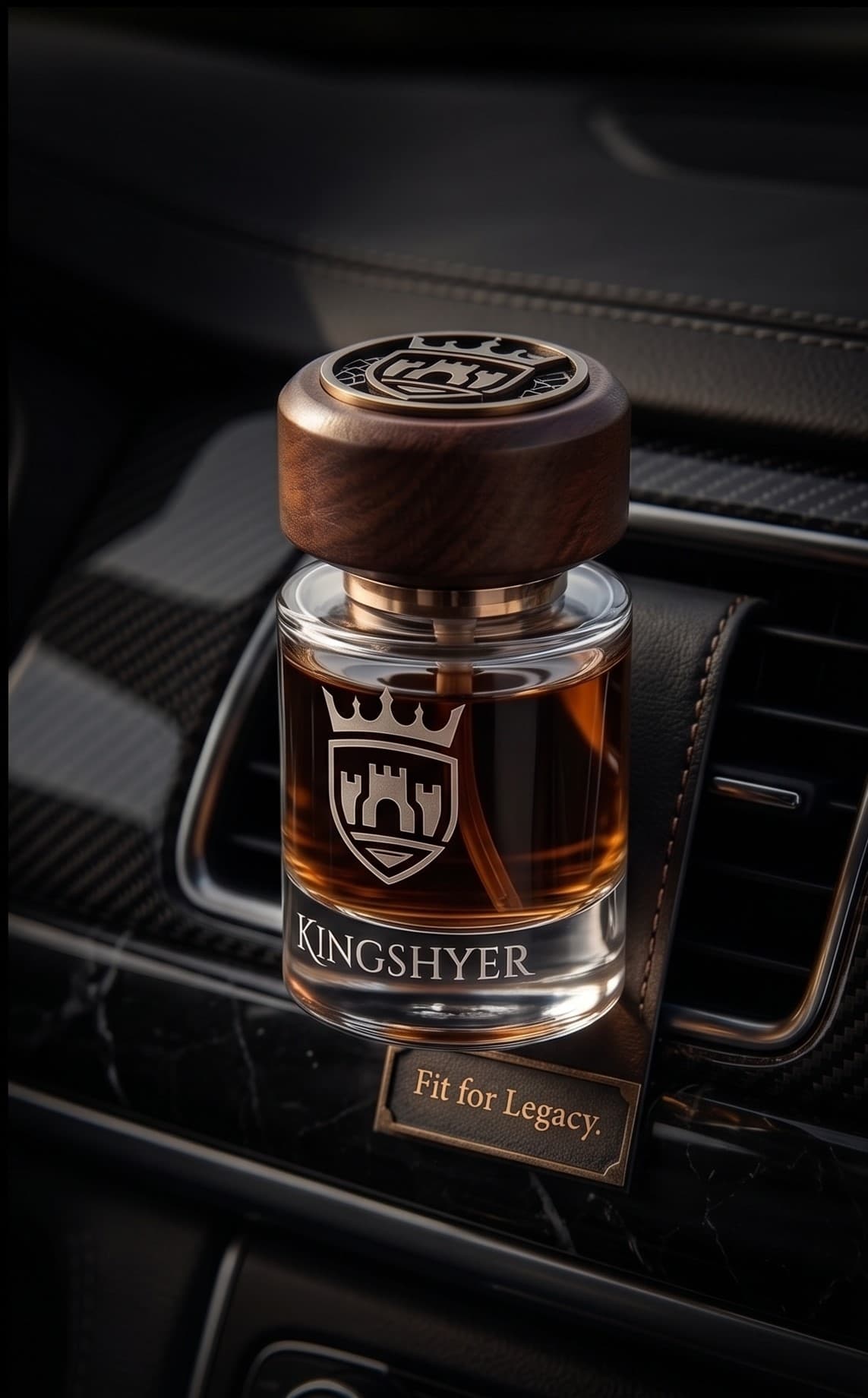
Car Diffusers vs. Traditional Fresheners: The Evolution of Automotive Scent
For decades, automotive scent was dominated by cheap chemical cardboard trees that delivered an overwhelming synthetic blast for two days before drying into useless waste.
The Olfactory Pyramid: Understanding Top, Heart, and Base Notes in Pure Oils
Discover the chemistry of olfactory volatility. Understand why pure concentrated oils bloom differently than mass-market alcohol colognes across the fragrance pyramid.