
Car Diffusers vs. Traditional Fresheners: The Evolution of Automotive Scent
For decades, automotive scent was dominated by cheap chemical cardboard trees that delivered an overwhelming synthetic blast for two days before drying into useless waste.
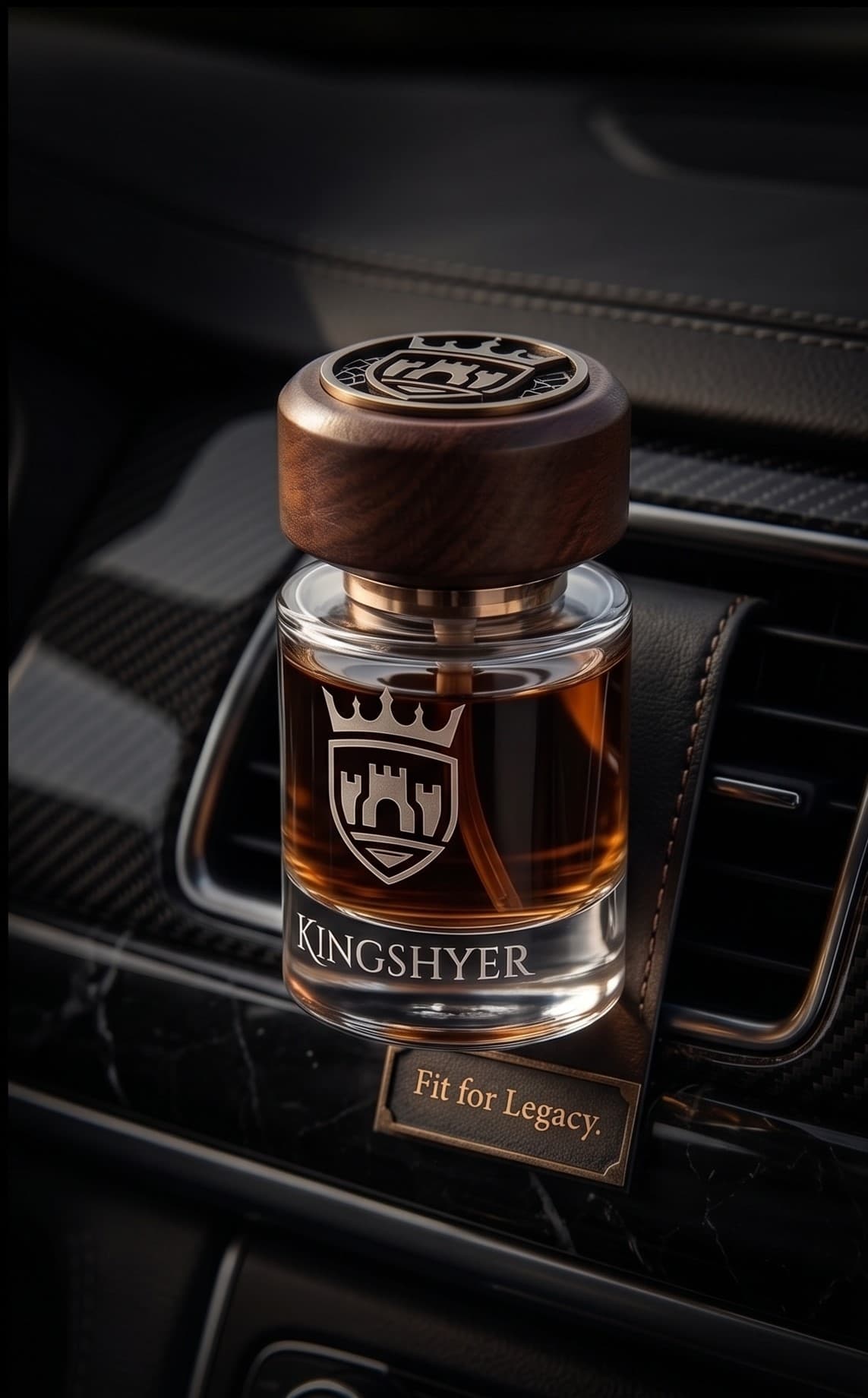
The Antiquated Era of Cardboard Scent Trees
For more than half a century, automotive fragrance has suffered under an outdated paradigm. Conceived in the mid-twentieth century as a disposable commodity for masking stale tobacco smoke in taxicabs, the dangling cardboard tree became an ubiquitous automotive fixture. Yet, as automotive design progressed toward handcrafted leather seating, brushed aluminum trim, and acoustic sound insulation, the vehicle air freshener remained fundamentally primitive.
The operational mechanism of conventional cardboard fresheners is inherently flawed. Inexpensive sheets of recycled wood pulp are soaked in a bath of volatile chemical solvents, synthetic esters, and artificial musk compounds. When unwrapped and hung from a rearview mirror, the solvent begins evaporating immediately at room temperature. For the first forty-eight hours, the cabin is inundated with an aggressive, synthetic chemical fog—frequently inducing headaches, sensory fatigue, and olfactory desensitization.
By day five, particularly under the unforgiving Australian sun where interior car temperatures routinely surpass 60°C, the solvent bath has entirely vaporized. The vehicle owner is left with a withered, unsightly piece of printed cardboard swinging against the windscreen, offering zero fragrance while degrading the interior visual harmony of an executive motor vehicle.
The Thermal Physics of Australian Vehicle Cabins
To understand why mass-market car air fresheners fail so miserably in Australia, one must examine automotive thermodynamics. Australia experiences some of the highest solar irradiance levels on earth. During summer months in Sydney, Melbourne, Brisbane, and the inland regions, a parked car acts as an efficient solar thermal collector. Within thirty minutes of parking under direct sunlight:
- Rapid Heat Accumulation: Windscreen glass admits shortwave solar radiation, heating dark dashboards to over 75°C and cabin air to over 60°C.
- Solvent Boiling Points: Synthetic scent diluents and alcohol propellants have low boiling thresholds. Under extreme thermal stress, liquid gel clips expand, boil, and can rupture their plastic seals, discharging corrosive chemicals onto digital infotainment displays or hand-stitched leather consoles.
- Cellulose Dessication: Cardboard fibers contract and curl, sealing off microscopic pores and trapping any residual scent within dead cellulose.
The Chemical Hazards of Low-Cost Automotive Solvents
The issue with conventional vehicle fresheners extends beyond poor longevity; it involves interior air quality. In a modern automobile, cabin insulation is engineered to seal occupants off from road noise and exterior pollution. When you introduce a cheap cardboard freshener or petroleum gel clip into this sealed space, the volatile organic compounds (VOCs) outgas into the recirculating airflow. Ingredients such as phthalate plasticizers, dipropylene glycol, and synthetic aldehydes linger in the cabin atmosphere.
Occupants inhale these high-concentration solvent vapors throughout their daily commute. Clinical studies in environmental toxicology have repeatedly linked synthetic vehicle fragrances to acute sensory irritation, sinus inflammation, and cognitive fatigue. For drivers who spend an hour or more in transit every day, breathing industrial solvent vapors creates a subtle but persistent strain on the nervous system. KingShyer automotive solutions, by contrast, utilize pure therapeutic-grade botanical perfume oils devoid of volatile chemical thinners, ensuring that your cabin air remains pristine, calming, and restorative.
The Engineering Behind Luxury Automotive Stone Diffusers
Recognizing the glaring void between modern automotive excellence and archaic scent delivery, KingShyer engineered the King Vapourizer Automotive Stone Diffuser and the KingShyer Air Card. Rather than treating automotive scent as a disposable novelty, our design team approached the cabin environment with the same precision applied to Swiss horology and aerospace industrial design.
1. High-Density Porous Ceramic & Volcanic Stone
At the center of our flagship diffuser lies an engineered volcanic stone and porous ceramic matrix. Unlike cellulose cardboard, this geological substrate features millions of interconnected microscopic pores. When charged with pure botanical perfume oil, the stone holds the liquid via surface tension and capillary attraction. Scent molecules are not expelled violently; they migrate steadily to the perimeter of the stone, releasing into the cabin through natural thermal micro-diffusion.
2. Aerospace-Grade Anodized Aluminum Housing
The stone matrix is encased in a CNC-machined, anodized aluminum chassis finished in satin obsidian. Designed to seamlessly integrate with luxury automotive interiors—from Mercedes-Benz and BMW to Porsche and Audi—the unit clips unobtrusively onto horizontal or vertical air conditioning louvers with silicone-sheathed grip prongs that will never scratch delicate vent blades.
3. Capillary Airflow Activation
As your vehicle's climate control system activates, airflow channels through precision vents in the aluminum faceplate. The moving air sweeps across the porous stone, gently carrying the fragrance throughout the cabin. When the air conditioning is off, the diffuser remains passive, conserving the essential oils and ensuring you are never greeted by an overpowering chemical cloud upon entering the vehicle.
Interior Preservation: Protecting Luxury Leather & Trim
Every automotive enthusiast knows that maintaining an executive vehicle requires vigilance against chemical contamination. One of the most widespread complaints among owners of luxury European vehicles is the destructive damage caused by leaking clip-on liquid fresheners. The aggressive solvents used to thin synthetic oils act as industrial paint strippers and solvent thinners. When a plastic clip leaks under Australian dashboard heat, the liquid eats through soft-touch polyurethane dashboard coatings, softens lacquer trim, and permanently stains aniline leather seats.
The KingShyer engineering ethos guarantees complete peace of mind. By anchoring our pure botanical perfume oils inside solid volcanic stone matrices or sealed high-density capillary microfiber cards, there is zero free liquid to leak, spill, or boil over. Even when parked under 40°C heatwaves in Western Sydney or inland Victoria, your vehicle's delicate interior trim remains completely protected.
Defensible Category Comparison
| Evaluation Metric | KingShyer Automotive Diffuser | Cardboard Hanging Freshener |
|---|---|---|
| Diffusion Technology | Porous volcanic stone capillary release | Solvent-dipped recycled wood pulp |
| Australian Heat Longevity | 30 to 45 days continuous micro-diffusion | 2 to 5 days rapid evaporation |
| Olfactory Profile | Pure botanical oud, cedarwood, and amber | Synthetic pine, fake vanilla, artificial musks |
| Cabin Safety | 100% leak-proof, zero volatile solvents | Risk of chemical leakage and windshield obstruction |
| Environmental Footprint | Infinitely refillable aluminum & stone | Disposable single-use landfill waste |
The Psychology of the Executive Commute
The modern automobile is more than a means of conveyance; for executive professionals and discerning individuals across Melbourne, Sydney, and Brisbane, it serves as a personal sanctuary, mobile office, and decompression chamber between high-stress engagements. Sensory psychology demonstrates that olfactory inputs bypass the rational thalamus, traveling directly to the amygdala and hippocampus—the primitive neural epicenters governing emotion and long-term memory.
When exposed to harsh synthetic fragrances during a forty-five-minute traffic commute, the autonomic nervous system registers micro-stress responses, manifesting as mild headaches, eye strain, and irritability. Conversely, breathing authentic cedarwood, aged amber, and rare agarwood oils stimulates parasympathetic grounding. The cabin becomes an executive lounge—a serene, restorative environment that sharpens focus and elevates your daily ritual.
Installation and Care Guidelines
To extract optimal performance from your KingShyer automotive diffuser:
- Select Vent Placement: Position the diffuser on a central air conditioning vent where climate-controlled air circulates evenly throughout both front and rear cabin zones.
- Adjust Climate Flow: Moderate fan speeds produce the most balanced diffusion. In winter, warm air passing over the stone matrix accelerates diffusion, filling the cabin with cozy amber warmth. In summer, cool conditioned air maintains a crisp, refreshing aura.
- Replenishment: When the aroma begins to subside after 4 to 6 weeks, apply 3 to 5 drops of your preferred KingShyer pure perfume oil to the stone surface. Allow the liquid to absorb fully before replacing the diffuser on the vent.
Discover the full range of automotive diffusers and bespoke refill oils in our Luxury Car Fresheners Collection.
Experience Ceramic & Stone Diffusion
Elevate your daily Australian commute with solid volcanic stone diffusers and pure botanical refills engineered to outlast summer cabin heat.
Frequently Asked Questions
Inquiries regarding the topics, science, and recommendations discussed in this guide.
Related Guides
The Art of Attar: The History & Craft of Pure Concentrated Perfume Oils
Centuries before industrial mass perfumery introduced pressurized alcohol sprays, olfactory masters practiced hydro-distillation into pure botanical carrier oils.
The Olfactory Pyramid: Understanding Top, Heart, and Base Notes in Pure Oils
Discover the chemistry of olfactory volatility. Understand why pure concentrated oils bloom differently than mass-market alcohol colognes across the fragrance pyramid.
How to Layer Perfume Oils: A Guide to Creating Your Signature Scent
True luxury is never generic. Learn how to combine complementary pure perfume oils on skin pulse points to craft an olfactory signature entirely your own.